Orbis International Commits $32 Million to Improve Global Eye Health
News related to:Orbis International · 3 min read
NEW YORK, Oct. 30, 2026 /CourierPR/ -- Orbis International, a global nonprofit dedicated to preventing blindness and restoring sight, has announced a significant commitment to improve eye health worldwide. The organization is pledging an estimated $32 million in financial and technical contributions from 2027 through 2030, aiming to contribute to better eye health outcomes for more than 18 million people globally.
The commitment is part of the first Global Summit for Eye Health, hosted by the Government of Antigua and Barbuda in collaboration with the World Health Organization (WHO). This summit brings together leaders from government, the public and private sectors, NGOs, and funding institutions to share ambitious commitments to reach the 1 billion people living with avoidable vision loss.
Orbis International has endorsed the St. John's Global Compact for Eye Health and its shared agenda for action, investment, and accountability. The organization's commitments under the compact focus on workforce development, quality cataract care, and the responsible use of digital technology and artificial intelligence.
President and CEO Kathleen Sherwin emphasized the importance of practical action at the summit.
A significant part of the commitment involves training more eye health professionals. By 2030, Orbis International plans to support the ongoing professional development of more than 250,000 eye health professionals globally, including through its Cybersight platform. Cybersight is the world's leading digital platform for eye health, connecting learning, mentorship, AI, and clinical support to strengthen eye-health systems at scale. Orbis will continue providing free access to Cybersight through 2030, representing an estimated $15 million contribution over four years.
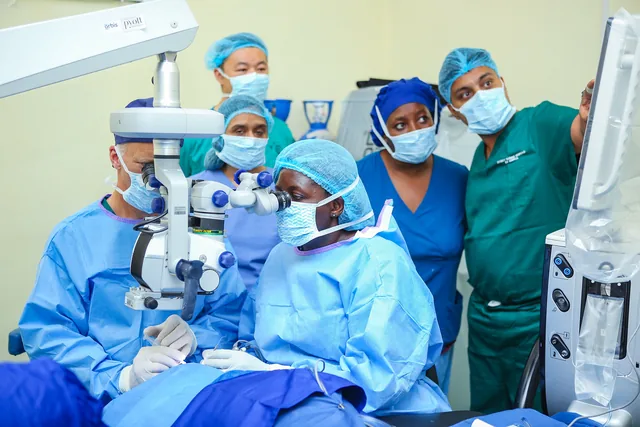
Expanding access to quality cataract care is another focus. Cataract is the leading cause of blindness globally, and timely, high-quality surgery can restore sight. Orbis International will invest the equivalent of $17 million in financial and technical contributions between 2027 and 2030 to strengthen the eye health workforce, improve surgical quality, build institutional capacity, and expand access to high-quality cataract services. This work will contribute toward WHO's 2030 cataract targets and the SEE 2045 global initiative.
Orbis International will work with governments and partners, including Alcon, to support cataract training through hands-on clinical experience, digital learning, mentorship, and simulation.
Another key initiative involves bringing responsible AI into routine eye care. Beginning in 2027, Orbis International will partner with the Government of Antigua and Barbuda to integrate AI-assisted diabetic retinopathy screening into routine diabetes care, supporting the Prime Minister's Vision Initiative. The partners aim to achieve at least 80% screening coverage among people receiving diabetes care by 2030, with referral, diagnosis, treatment, and follow-up pathways for patients who need further care.
Orbis International's approach is to invest in eye care professionals and institutions, ensuring improvements continue long after an individual program ends. The organization will provide direct support to strengthen government-led systems and institutions in 16 countries, while offering global access to learning, mentorship, and clinical support through Cybersight across more than 200 countries and territories. Its work will place particular attention on women, girls, and underserved communities.
Orbis International began this work more than 40 years ago with the Flying Eye Hospital, a teaching hospital on a plane that brings expert training and care where they are needed most. Today, it also works with local hospitals and clinics across Africa, Asia, and Latin America to make eye care available to more people, and it uses and develops technology, like its award-winning Cybersight e-learning and telehealth platform, artificial intelligence screening, and virtual reality training, to help eye care teams treat patients more effectively.
Around 1.1 billion people live with vision loss, but with the right care, 90% of it is completely avoidable. Orbis trains doctors, nurses, and other eye care professionals to provide care in their own communities and works to ensure people of all ages can access the eye exams, glasses, medicine, and surgeries they need to protect and restore their sight.