Young Activists on Mekong Take Action Against Bumpy Catfish
News related to:Hug the Mekong ASEAN Youths · 3 min read
As world leaders gather in Antalya, Türkiye, for COP31 (November 9-20), young people on the banks of the Mekong River are taking action to address environmental concerns. Hug the Mekong ASEAN Youths, a youth-led and women-led group, has been at the forefront of this effort.
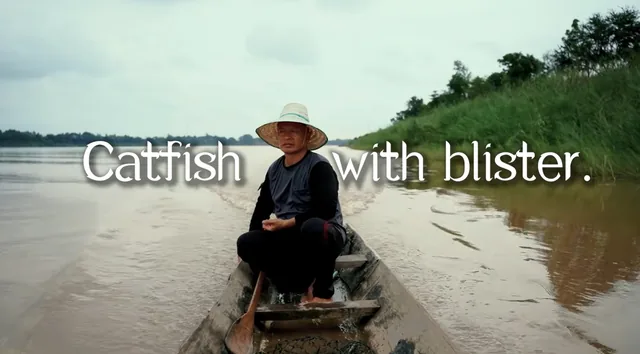
The story began during the flood season, when a fisherman in Chiang Khan District, Loei Province, caught a catfish with unusual symptoms. Less than a week later, fishermen in Had Kham Village, Nong Khai Province, caught another fish of the same species showing similar abnormalities. This prompted the Hug the Mekong Youth Network and the association to investigate further and collect samples for scientific testing.
Through interviews with local fishermen in Sangkhom District and Had Kham Village, the youth group learned that abnormal fish had been observed since the COVID-19 pandemic, many of them with bumps on their fins, tails, and whiskers. Laboratory examinations revealed that the bumps were caused by parasitic cysts and infections, which may indicate environmental stress affecting fish in the Mekong River.
These findings are significant because they raise concerns about the health of the Mekong ecosystem, food safety, water quality, and the well-being of communities that depend on the river.
Once the fish samples had been analyzed and the results were available, the association shared the findings with the public and the media, to raise awareness among Mekong River communities and encourage greater environmental monitoring and public vigilance. News footage shown in the film relates to this discovery.
Following publication of the findings, civil society groups, riverbank communities, and the public raised concerns about water quality, food safety, and the potential long-term impacts on human health. The discovery led to a series of discussions and information-sharing forums involving government agencies, researchers, civil society organizations, fishermen, young people, and local communities.
The team also organized community feedback sessions to present the results and trained local residents to collect environmental samples, helping to establish a network of citizen scientists able to monitor environmental changes in their own communities. Today, the association and youth network continue to monitor environmental conditions along the Mekong River closely. One of the project’s key achievements has been the establishment of a Mekong citizen science network across 14 secondary schools in Nong Khai Province, involving students, teachers, fishermen, and local residents who actively monitor and document conditions along the river.
Students regularly collect fish samples and environmental data during both the dry and wet seasons, while local fishermen continue to report environmental abnormalities and changes they observe in the river.
The Spark Fund, a component of the Global Fund for Children, plays a vital role in empowering young people to transform their concerns about environmental issues and the climate crisis into meaningful action. Its support enables them to conduct field research, collect scientific data, work alongside local communities, produce documentaries, and communicate important environmental issues to wider audiences.
The youth group believes that world leaders should invest more resources directly in local youth-led initiatives. Young people living in affected communities often have the deepest understanding of local environmental challenges and, when provided with the right resources and opportunities, they can develop innovative, community-driven solutions that create real impact. Its Spark Fund gives youth-led groups in Thailand and Vietnam grants of $5,000 to $15,000, alongside training and leadership opportunities, and is exploring expansion to Indonesia, Malaysia, and the Philippines.
Last year, at COP30 in Belém, Global Fund for Children published Weaving Climate Solutions, co-created with 43 Brazilian youth collectives, which called on funders to put money and decision-making power directly in the hands of young people on the front lines. The Mekong film shows what that looks like in practice: young people telling their own story, on their own terms, about the place they call home.