Widespread Antibiotic Overuse Found for Acute Sinusitis Across U.S
News related to:Motive Medical Intelligence · 2 min read
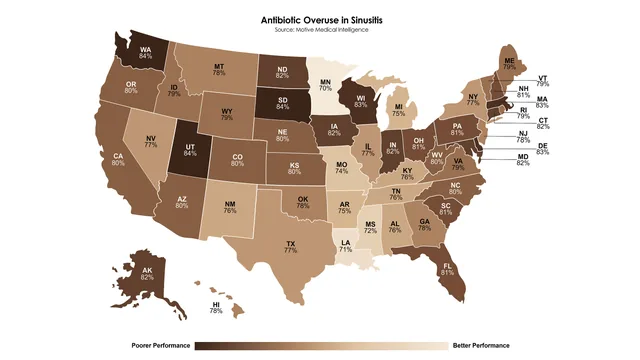
SAN FRANCISCO, Oct. 27, 2026 /CourierPR/ -- A new analysis by healthcare data analytics leader Motive Medical Intelligence has revealed widespread overuse of antibiotics for acute sinusitis across the United States. The study, which covered 22,178 primary care clinicians from all 50 states and the District of Columbia, found that more than three-quarters of these clinicians continue to prescribe antibiotics to patients with acute sinusitis, a condition that lasts less than 10 days.
According to the analysis, which was based on claims data from January 2023 through December 2024, only two states, Minnesota and Louisiana, met Motive's 72% best-practice benchmark for appropriate antibiotic prescribing. At the other end of the spectrum, South Dakota, Utah, and Washington posted the highest overuse rates, with over 83% of clinicians prescribing antibiotics unnecessarily.
The overuse of antibiotics for acute sinusitis is not only a concern for patient safety but also a significant financial burden on the U.S. healthcare system. Unnecessary antibiotic use exposes patients to potential side effects, contributes to antibiotic resistance, and costs the healthcare system more than $11 billion annually. Despite decades of guidelines urging watchful waiting without antibiotics, primary care clinicians continue to overprescribe, driven by fears of missing a serious infection and concerns about patient satisfaction.
Acute sinusitis is one of the most common reasons people seek medical care, with about 12% of U.S. adults reporting having the condition each year. The condition drives more than 30 million annual diagnoses, according to data from the American Academy of Otolaryngology-Head and Neck Surgery Foundation. Most acute sinusitis cases are viral, and the American College of Physicians (ACP) and the Centers for Disease Control and Prevention (CDC) recommend reserving antibiotic treatment for patients with persistent symptoms for more than 10 days.
Dr. Julie Scherer, Chief Solutions Officer at Motive Medical Intelligence and the lead data scientist for the study, emphasized the importance of measuring prescribing at the individual clinician level to close the gap between recommended care and actual practices.
The study highlights the need for continued efforts to improve clinical performance and reduce waste in the U.S. healthcare system. Motive Medical Intelligence is part of a broader initiative to eliminate the $400 billion in annual waste in the U.S. health system, advancing the transition to high-value, patient-centered care and achieving the quadruple aim of improved patient experience, better health outcomes, lower costs, and a more satisfying work environment for healthcare providers.