New York City Tightens Lithium-Ion Battery Fire Regulations
News related to:Allstate Sprinkler · 2 min read
THE BRONX, N.Y., Sept. 29, 2026 /CourierPR/ -- Allstate Sprinkler, a fire protection contractor based in the Bronx since 1972, has released an analysis connecting the new international fire classification for lithium-ion batteries to the stringent regulations in New York City. The analysis highlights the growing concern over lithium-ion battery fires and the measures taken by the city to address this issue.
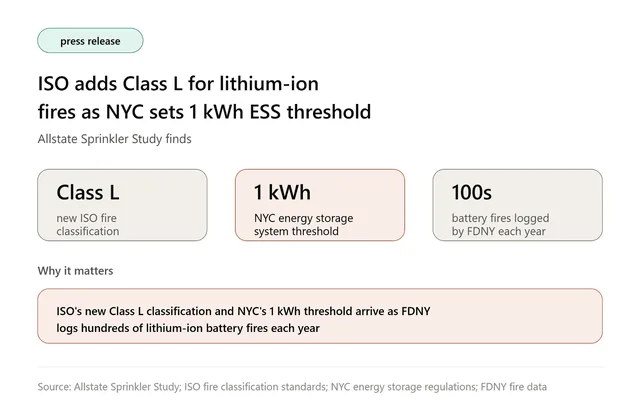
On January 21, 2026, the third revision of ISO 3941 was published, removing the 2007 second addition and adding the Class L specification for lithium-ion cell and battery fires. This new classification is significant because it recognizes the unique hazards associated with lithium-ion batteries, such as rapid fire growth, venting of hot and combustible gases, and the potential for re-ignition. The Class L classification is distinct from the Class D classification used for combustible metal fires, such as those involving lithium-metal batteries.
In New York City, the regulatory approach to lithium-ion energy storage systems (ESS) is among the strictest in the country. Under the amended NFPA 855 framework, the threshold quantity triggering regulatory obligations for lithium-ion ESS is just 1 kWh. By comparison, lead-acid battery storage systems get a threshold of 70 kWh under the same framework before matching regulatory requirements kick in. This seventy-fold variance was established in city law prior to the ISO revision, subjecting lithium-ion storage to regulatory review at lower capacities than other common battery chemistries.
The New York City Fire Department (FDNY) has been closely monitoring the issue. In 2024, the department reported 277 lithium-ion battery fires across the city, compared to the already high figure of 268 fires registered in 2023. While both figures represented increased activity from previous years, the number of fatalities linked to lithium-ion battery fires dropped significantly from 2023, where 18 people were recorded as having died, to six fatalities in 2024, representing a 66% drop in mortality. The pattern continued into 2025. By June 12, 2025, the department had already noted 110 fires and 25 injured residents due to incidents involving lithium-ion batteries. The analysis conducted by the FDNY suggests that nearly 60% of the lithium-ion battery fires reviewed during 2023 occurred while the batteries were not being charged, countering a common belief that charging times are the primary window for danger.
These findings align with the data from the ISO 3941:2026, the New York City Department of Buildings' revised NFPA 855 requirements, and the New York State Department of State's charging-cord label requirements. The analysis from Allstate Sprinkler, which is based on these sources, clearly indicates the need for a unique risk assessment for lithium-ion batteries. Building owners are advised to start with a clear, documented assessment rather than assumption, and FDNY approval and UL testing are generally required, unless specific regulatory exemptions apply.
The ISO's new Class L classification and the 1 kWh ESS threshold implemented in New York City underscore the unique risks associated with lithium-ion batteries. This does not mean that all buildings must immediately overhaul their fire protection systems, but it does highlight the need for a more nuanced approach to fire safety in the context of these batteries. The FDNY's incident reports and the ISO's new classification are part of a sustained multi-year risk landscape that continues to evolve.