Kalmar Secures Order for Electric Straddle Carriers at Port of Virginia
News related to:Kalmar · 2 min read
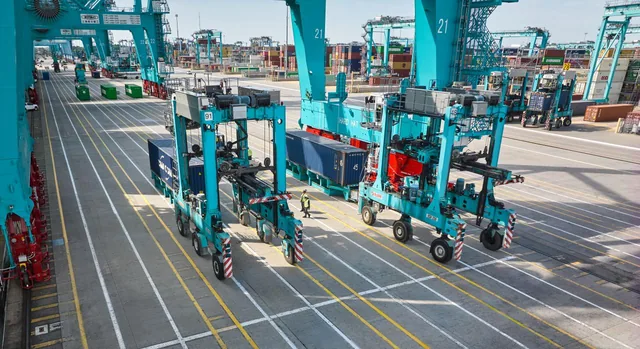
Kalmar Corporation has secured a significant order from the Port of Virginia for 10 Kalmar Electric Straddle Carriers. The order, booked in Kalmar's third quarter 2026 order intake, will be delivered to the Port of Virginia's Norfolk International Terminals (NIT) during the third quarter of 2027. This expansion will bring the terminal's fleet to more than 90 semi-automated stacking cranes and 113 Kalmar Hybrid Straddle Carriers, with an annual terminal capacity of 3.6 million TEUs following ongoing expansion.
The Port of Virginia, a deep-water port on the U.S. East Coast, is committed to sustainable operations and aims to achieve net-zero carbon emissions (Scope 1 & 2) by 2040. The electric straddle carriers, designed for heavy equipment, are equipped with the latest lithium-ion batteries and can operate for up to 600 minutes. They will also be fitted with the Kalmar Collision Warning System, which improves safety by alerting operators to potential collision risks using a combination of visual and audible alarms.
Kalmar Corporation, headquartered in Helsinki, Finland, operates globally in over 120 countries and employs approximately 5,300 people. In 2025, the company's sales totalled approximately EUR 1.7 billion. The Port of Virginia operates semi-automated container terminals, including Virginia International Gateway (VIG) and Norfolk International Terminals (NIT). The Port of Virginia is deeply committed to sustainable operations and the development of an eco-efficient supply chain.
The 10 Kalmar Electric Straddle Carriers will be delivered to NIT, which is the port’s largest terminal. When the delivery is complete, the terminal will have more than 90 semi-automated stacking cranes and 113 Kalmar Hybrid Straddle Carriers and an annual terminal capacity of 3.6 million TEUs following ongoing expansion. The electric straddle carriers are fitted with the latest most technically advanced lithium-ion batteries designed especially for heavy equipment, they can operate for up to 600 minutes. Additionally, the machines will be equipped with the Kalmar Collision Warning System, which improves safety by alerting operators to potential collision risks using a combination of visual and audible alarms.
Kalmar Corporation, headquartered in Helsinki, Finland, operates globally in over 120 countries and employs approximately 5,300 people. In 2025, the company's sales totalled approximately EUR 1.7 billion.