FIRE1 Launches NORM-HF Trial to Evaluate New Heart Failure Management Approach
News related to:FIRE1 · 2 min read
DUBLIN, Sept. 30, 2026 /CourierPR/ -- FIRE1, a company based in Dublin, Ireland, has announced the commencement of the NORM-HF pivotal trial, a landmark international, randomized study aimed at evaluating a new physiologic approach to managing heart failure. The trial, which will involve approximately 800 patients, seeks to determine whether daily inferior vena cava (IVC) monitoring and physician-directed patient self-management can reduce worsening heart failure events and cardiovascular mortality.
Heart failure, a condition affecting roughly 6.7 million patients in the United States alone, remains one of the largest and most costly challenges in healthcare. The disease is characterized by recurrent hospitalizations, impaired quality of life, and a significant burden on patients, caregivers, clinicians, and health systems. The NORM-HF trial is designed to address this unmet need by combining earlier physiologic insight with physician-directed patient self-management.
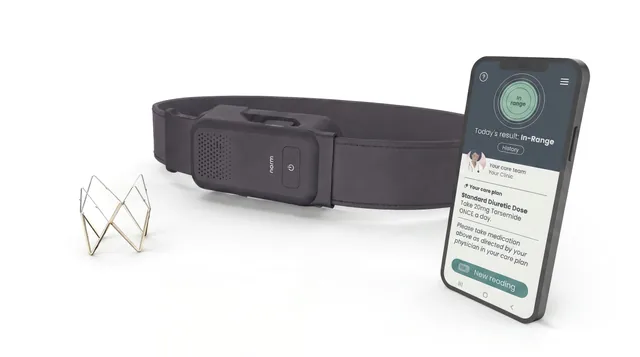
The investigational Norm System, a key component of the NORM-HF trial, is an implantable sensor positioned in the inferior vena cava (IVC). This sensor measures dynamic changes in IVC size and collapsibility, providing real-time data on a patient's volume status and venous congestion physiology. Patients use the Norm system at home to take daily readings, which generate a patient-specific Norm Congestion Score. This score is intended to help patients and clinicians recognize changes from the patient's physiologic baseline.
Under a predefined, physician-directed care plan programmed into the patient app, patients can self-manage their condition following the app's prompts for protocol-based therapy adjustments. The clinical team remains connected to the patient's clinical status, ensuring that any necessary interventions are promptly addressed. The primary endpoint of the NORM-HF trial is a composite of worsening heart failure events and cardiovascular mortality.
Existing implanted remote-monitoring approaches require substantial ongoing clinician review, interpretation, and intervention. These workflow demands, together with procedural and adoption barriers, have limited the use of implanted physiologic monitoring relative to the large number of heart failure patients who may be eligible. The NORM-HF trial aims to rigorously test whether information from the device, which reflects a very early signal of congestion before heart failure symptoms develop, can help guide management to reduce heart failure hospitalizations and improve outcomes.
The NORM-HF trial is expected to provide valuable insights into the potential of a more scalable care model for heart failure management. By combining daily IVC-based physiologic monitoring, physician-defined treatment algorithms, and patient-executed, physician-prespecified action plans, the trial aims to usher in a novel paradigm of proactive and personalized heart failure care, ultimately lessening the burden of the disease.