BioBrain Insights Reveals AI Trust Gap in Consumer Decision-Making
News related to:BioBrain Insights · 2 min read
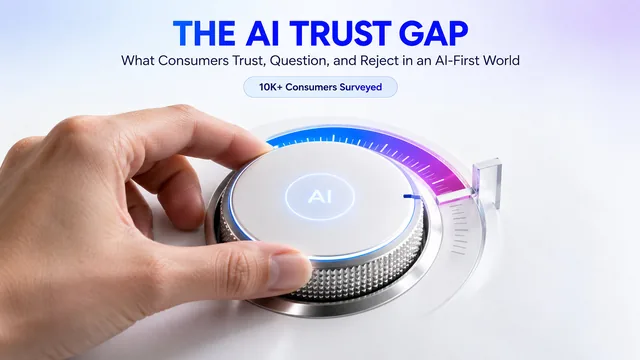
WILMINGTON, Del., Oct. 7, 2026 /CourierPR/ -- BioBrain Insights, a global data insights and research company, has released findings from a new study that delves into consumer attitudes toward artificial intelligence (AI). The study, titled "The AI Trust Gap," surveyed over 10,000 consumers and revealed a significant divide between the use of AI and the willingness to delegate decision-making authority to it.
According to the research, 45% of consumers use AI-powered tools daily, and 43% express excitement about AI, indicating a growing acceptance of the technology in everyday life. However, when it comes to making important decisions, the majority of respondents still prefer human oversight. Specifically, 37% of participants said that a human review would make them more willing to trust AI, while 40% preferred that AI decisions be reviewed by a human.
The study highlights that while consumers are comfortable with AI in certain contexts, such as writing and summarizing, they are more cautious about high-stakes decisions. Areas like healthcare, employment, and finance, where the stakes are higher, are seen as requiring more human involvement. Privacy and accuracy emerged as major concerns, with 51% of respondents citing these as primary reasons for distrust in AI.
This finding underscores the need for companies and developers to ensure transparency and accountability in AI systems to build consumer trust.
The research also revealed that consumer trust in AI varies across different demographic groups, including generation, gender, and education. These factors influence how consumers use AI, how much they trust it, and where they draw the line on AI decision-making. For instance, younger generations tend to be more open to AI, while older generations may be more cautious.
BioBrain Insights' findings suggest that consumer trust in AI is not solely determined by usage. As AI moves from assisting to influencing consequential decisions, expectations around human oversight, transparency, privacy, accuracy, and accountability become increasingly important. The company's report provides detailed consumer segmentation and analysis of AI trust, usage, decision-making authority, distrust, and reassurance factors, offering valuable insights for businesses and policymakers.
In conclusion, the study highlights the ongoing challenge of balancing AI adoption with the need for human oversight. Companies must address consumer concerns about privacy and accuracy while ensuring that AI systems are transparent and accountable. This balance is crucial for the responsible development and deployment of AI technologies.