University of Colorado Anschutz Expands CSF Leak Program with $50 Million Donation
News related to:University of Colorado Anschutz · 2 min read
AURORA, Colo., Sept. 24, 2026 /CourierPR/ -- The University of Colorado Anschutz Medical Campus has seen a significant breakthrough in the diagnosis and treatment of cerebrospinal fluid (CSF) leaks, a condition that can leave patients suffering for years before receiving the correct diagnosis. A $50 million donation from an anonymous donor will help expand the CSF Leak Program at the university, enhancing patient access, research, and innovation.
Jen MacKenzie, a mother of two from Washington state, experienced a dramatic decline in her quality of life after a seemingly ordinary summer day in 2017. Within months, she was plagued by symptoms such as severe headaches, dizziness, and cognitive fog. Despite seeing multiple specialists, including neurologists, she was misdiagnosed with various conditions, including migraines and temporomandibular dysfunction. It was only after almost two years that a primary physician suggested she might have a CSF leak.
In 2022, Jen finally found relief when she was diagnosed by Andrew Callen, MD, at the CU Anschutz School of Medicine. Callen diagnosed her with an iatrogenic CSF leak, meaning the condition was caused by a medical procedure. Using a specialized MRI protocol, Callen localized a "bleb" along her lumbar spine, a small outpouching of the dura that had been present on her earliest MRIs. Callen suspected that during her first childbirth, an epidural needle had accidentally punctured the dura.
Jen's treatment began with a patch using fibrin glue, a sealant made from pooled donated human plasma. The patch procedure, while providing immediate relief, was only temporary. In February 2023, she returned to CU Anschutz for surgery performed by Callen's neurosurgical partner, Peter Lennarson, MD. Using a minimally invasive approach, Lennarson repaired the bleb, leading to a significant improvement in Jen's condition.
Recovery from a CSF leak is often a complex and fluctuating process. Jen experienced a period of rebound intracranial hypertension, where her symptoms fluctuated and new symptoms appeared as her body adjusted to the closed state. It was not until September 2025 that she was able to drive again, nearly two and a half years after the surgery. Despite the challenges, Jen is now an active participant in her life once more, able to travel, cook, and run errands with renewed confidence and independence.
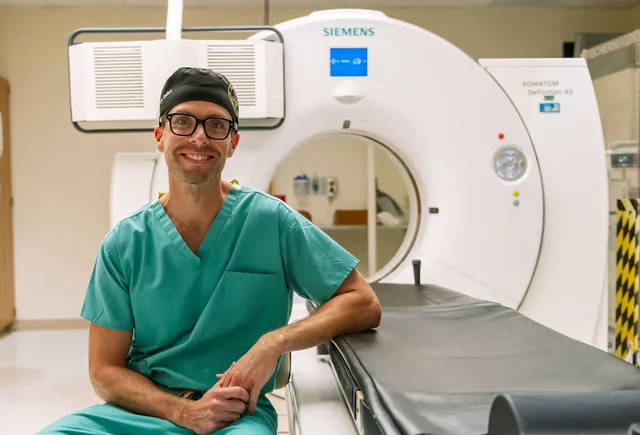
The $50 million donation will support the growth of the CSF Leak team, enabling additional specialists to focus entirely on this condition. Callen, who grew up in the Bay Area and is the son of a pioneer in obstetric ultrasound, emphasizes the importance of patient-centered care. He notes that nearly 80% of patients with CSF leaks are misdiagnosed and see a median of more than six clinicians before receiving the correct diagnosis. The donation will also fund research into the true burden of CSF leaks, particularly spontaneous leaks, which are still not well understood.
Callen envisions a future where the diagnosis and treatment of CSF leaks become more accessible, and stories of extreme perseverance like Jen's become a thing of the past. "I help people," he said.
The donation will not only enhance the capabilities of the CSF Leak Program but also support the broader mission of the University of Colorado Anschutz Medical Campus to advance medical research and patient care.