onsemi Charts Path to Address Power Constraints in AI Electrification and Automation
News related to:onsemi · 3 min read
SCOTTSDALE, Ariz., Sept. 16, 2026 /CourierPR/ -- onsemi, a leading semiconductor company, has outlined its long-term growth strategy to address the growing power constraints in AI, electrification, and automation. The company aims to leverage its differentiated portfolio across power and sensing to capture a $213 billion market opportunity by 2030.
According to Hassane El-Khoury, President and CEO of onsemi, "Every transformational technology eventually encounters a physical constraint. As AI, electrification, and automation continue to scale, power density is emerging as one of the defining engineering challenges of this decade." The company believes that the companies leading in the next era of innovation will be those that can deliver more energy while consuming less space.
onsemi sees a $213 billion total addressable market by 2030, spanning automotive, industrial, AI data center, and emerging applications. Although these markets are often viewed separately, they increasingly rely on the same underlying capabilities: efficient power conversion, perception of the physical world, precision actuation and control, and connectivity. This convergence allows onsemi to deploy common technology platforms across multiple end markets.
For instance, a high-voltage technology developed for automotive electrification can also support industrial energy systems and AI data centers. Advances in sensing and connectivity can extend across vehicles, factories, robotics, medical systems, and other autonomous applications. The company expects this platform-based model to increase the revenue potential of its core technologies by moving from individual components to higher-value solutions and system architectures that address a larger share of each customer's design requirements.
El-Khoury emphasized, "Power has become the common denominator across these end markets. For onsemi, that creates opportunities to innovate beyond any market trend, with multiple paths to expand content, gain share, and capture more value." The company has expanded beyond traditional power semiconductors to build capabilities spanning technologies, products, solutions, and systems. Three key technology platforms will shape the next generation of intelligent systems and drive long-term growth across its key end markets:
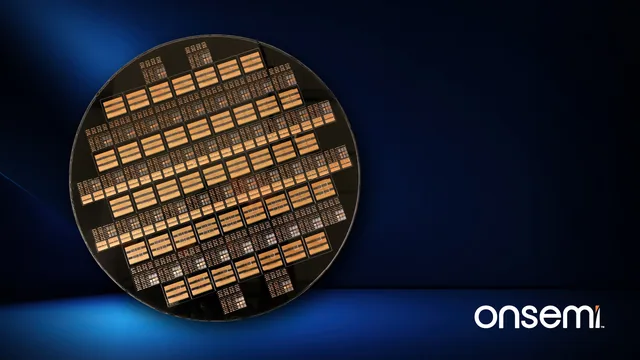
1. High-Voltage Technologies: The Device Layer onsemi's high-voltage portfolio spans silicon, silicon carbide (SiC), and gallium nitride (GaN), providing customers with a range of options to optimize performance, efficiency, power density, and cost. The portfolio includes vertical gallium nitride (vGaN), a differentiated technology exclusive to onsemi, designed for next-generation high-voltage applications that can increase efficiency, improve switching performance, and reduce system size where conventional power technologies are reaching their limits.
2. Treo: The Intelligence Layer The Treo platform's high precision analog, high density digital, and high voltage capabilities enable systems to become more precise, adaptive, and autonomous. This allows onsemi to add these capabilities around the power device, increasing the functionality and value within a customer's system.
3. Embedded Power Platform (EPP): The Integration Layer EPP reimagines the package from passive housing into an active contributor to system performance. By using the silicon wafer itself as the package, EPP enables the seamless integration and interconnection of silicon, SiC, and GaN technologies within a highly integrated wafer-level architecture. Multiple devices, including FETs, drivers, and controllers, can be embedded together in a single package and co-optimized for electrical, thermal, and mechanical performance. This enables complete power-system co-design, allowing electrical, thermal, and mechanical characteristics to be evaluated and optimized together from day one. The result is higher power density, improved system performance, reduced development complexity, and faster time-to-market.
onsemi's strategy focuses on the entire system-level solution, reducing design complexity and accelerating development across automotive, industrial, AI data center, and emerging applications. This approach creates a competitive advantage that is difficult to replicate through individual components alone.
The company is also expanding its focus beyond the data center to the physical world, where AI systems must sense, decide, act, and adapt safely in real-world environments. These physical AI systems require power, sensing, control, and connected compute to operate. Many of the same technologies onsemi developed for automotive and industrial applications can be applied to this emerging market. onsemi's ability to combine these capabilities through system-level co-design and optimize performance across the full stack positions it to deliver differentiated solutions and capture a larger share of the value created by physical AI.
El-Khoury concluded, "The most attractive opportunities of the next decade are emerging as markets converge around the same technologies. The ability to efficiently deliver power, sense the environment, and enable intelligent decision-making will define the next generation of intelligent machines. Our differentiated technology platforms enable us to solve power density across the device, intelligence, and integration layers in a way no other semiconductor company can, positioning us to expand our content and grow as AI moves from infrastructure into the physical world."