Nearly Three-Quarters of Young People Nervous About AI's Impact on Careers
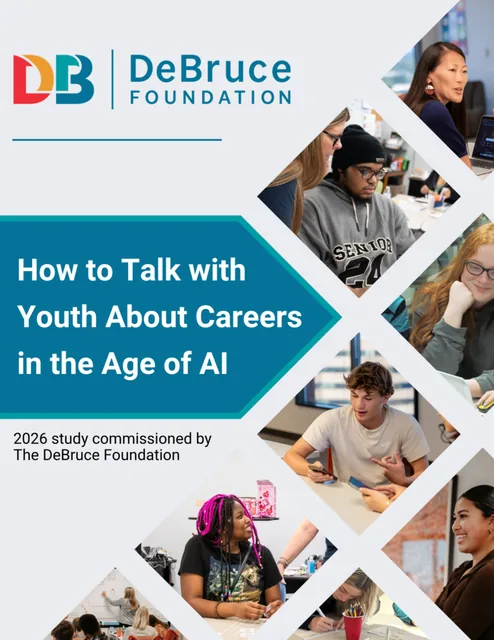
News related to:The DeBruce Foundation · 2 min read
KANSAS CITY, MO, Sept. 17, 2026 /CourierPR/ -- A national report commissioned by The DeBruce Foundation reveals that nearly three out of five young people feel nervous about AI affecting their future employment. Additionally, 60% of young people expect AI to shrink or eliminate career opportunities they would like to pursue, compared with 37% who expect it to open new opportunities that fit their strengths and interests.
The research, based on The DeBruce Foundation Emerging Youth Survey, administered in December 2025 and January 2026, surveyed 702 young people aged 16-24 across the United States. The survey aimed to reflect youth demographics nationwide by race, sex, and rural or metropolitan location. This is the fourth wave of youth research commissioned by The DeBruce Foundation since 2019.
The report highlights that young people are optimistic about their goals but uncertain about the path. 85% of young people are at least somewhat confident they will ultimately achieve their career goals, yet 44% say they have little or no idea what they need to do to prepare for a career. Only 11% say they have a very clear idea.
One in four young people is disengaged from thinking about a career future. While 79% say they are actively working to improve their work-related skills, 25% report that they do not spend time thinking about their career or do not want to. The more young people hear about AI’s potential effects on jobs, the more pessimistic they tend to become. Among youth who have heard a lot about AI’s likely impacts, 70% say it makes them nervous about their career prospects, compared with 46% of those who have heard little or nothing. Those who have heard a lot are 2.5 times as likely to strongly agree that AI makes them nervous.
The report identifies that career literacy and network strength can help buffer AI pessimism. Among youth who have heard a lot about AI, 46% of those with lower career literacy and network strength strongly agree that AI makes them nervous, compared with 33% of those with higher levels. Youth with stronger career literacy and networks are also more likely to expect AI to open opportunities.
Young people are interested in AI tools but may need help using them well. 63% say they have used AI tools for career exploration or job searching, and 76% are interested in using AI for at least one career exploration task. However, only 32% both use the tools and feel confident using them effectively.
Hope drives engagement. 93% of youth who expect AI to open new opportunities are interested in using AI career-exploration tools, compared with 66% of those who do not expect AI to open opportunities.
Drs. Leigh Anne Taylor Knight and Andrew Clarkwest, respectively the Executive Director and Chief Operating Officer of The DeBruce Foundation and the Managing Director in Workforce Strategy and Labor Market Research at American Institutes for Research, emphasize the importance of supporting young people in navigating the uncertainties brought by AI. "They do not need adults to pretend the future is predictable. They need support to understand their strengths, explore a range of possibilities, build relationships, and develop career literacy to move forward with confidence."
The full report and companion guide are available at debruce.org/insights/youth-and-careers/.