HoneyNaps Unveils Four-Patch Wireless PSG System for Enhanced Sleep Studies
News provided byHoneyNaps · 2 min read
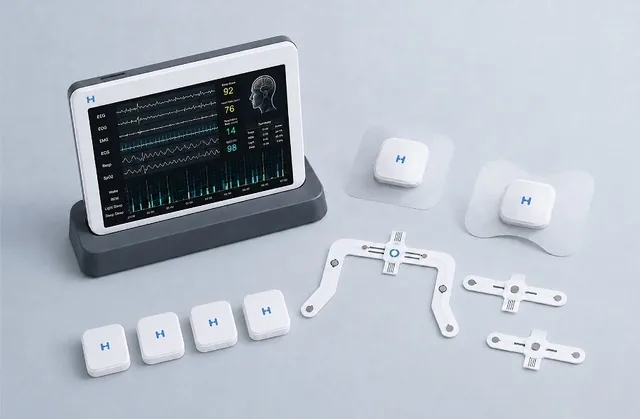
BOSTON, Sept. 4, 2026, HoneyNaps, a leading developer of AI-powered sleep medical devices, has unveiled a groundbreaking next-generation wireless polysomnography (PSG) system. This new platform reduces the number of wired sensors from over 24 to just four compact skin patches, significantly enhancing patient comfort and clinical efficiency.
Polysomnography is the gold standard for diagnosing sleep disorders such as sleep apnea. Traditional PSG typically involves patients wearing numerous wired sensors attached to their face, chest, abdomen, and legs. The cumbersome setup can be uncomfortable and may disrupt natural sleep patterns, leading to less accurate data collection. HoneyNaps sought to address these limitations with its innovative Wireless PSG system.
The new platform comprises four lightweight and discreet skin patches: a Head Sensor, Chest Sensor, Body Sensor, and Leg Sensor. These patches consolidate the functions of conventional wired sensors, allowing patients to move freely and sleep more naturally. The system can capture essential physiological signals, including EEG, EOG, ECG, EMG, respiratory airflow, blood oxygen saturation (SpO₂), body position, and physical activity, without the need for cables.
HoneyNaps has incorporated advanced technology to ensure medical-grade signal quality. The system features a six-layer flexible printed circuit board design, an integrated analog-to-digital converter, wireless noise-reduction technology, and electrostatic discharge protection. Additionally, the low-power design aims to reduce patient burden, making the technology suitable for both hospital and home settings.
Data collected from the wireless skin sensors are integrated with HoneyNaps' AI-powered sleep analysis software, SOMNUM. This software automates the analysis of key sleep indicators such as sleep stages, sleep apnea events, arousals, and periodic limb movements. By streamlining the traditionally labor-intensive scoring and interpretation process, the platform enables medical professionals to review sleep studies more efficiently. SOMNUM also includes edge-computing technology to process large volumes of physiological data in real time and support integration with centralized healthcare management systems.
The Wireless PSG platform represents a significant advancement in sleep sensing technology. HoneyNaps has already developed other technologies, including SOMNUM Scanning, a contactless sleep-sensing pad; single-channel EEG technology; AI-based sleep diagnostic software; and a digital therapeutic for insomnia. By integrating these innovations into a patch-based wireless device, HoneyNaps aims to expand its presence in the global sleep diagnostics market.
"By combining patch-based wireless skin sensors with AI-powered analysis, our Wireless PSG system not only improves patient comfort and diagnostic efficiency but also sets the stage for HoneyNaps to broaden its reach into home sleep testing, remote monitoring, and other digital healthcare services," said Sean Ha (Taekyoung Ha), President of HoneyNaps USA.
The company's new platform offers a promising solution for both hospitals and home settings, potentially revolutionizing the way sleep disorders are diagnosed and managed. With its focus on patient comfort and clinical efficiency, HoneyNaps is poised to make significant strides in the field of sleep medicine.