Georgia's Clean Air Force Urges Summer Vehicle Maintenance
News related to:Georgia's Clean Air Force · 2 min read
Georgia's Clean Air Force, a division of the Environmental Protection Division, is urging motorists to take preventive measures to ensure their vehicles are road-ready this summer. The organization, which oversees the Vehicle Emission Inspection and Maintenance (I/M) Program in Atlanta's 13 metro counties, including Cherokee, Clayton, Cobb, Coweta, DeKalb, Douglas, Fayette, Forsyth, Fulton, Gwinnett, Henry, Paulding, and Rockdale, highlights the importance of regular vehicle maintenance to prevent breakdowns and improve safety.
Odom emphasizes that many common issues can be identified early with a few simple checks, preventing more expensive repairs and safety concerns.
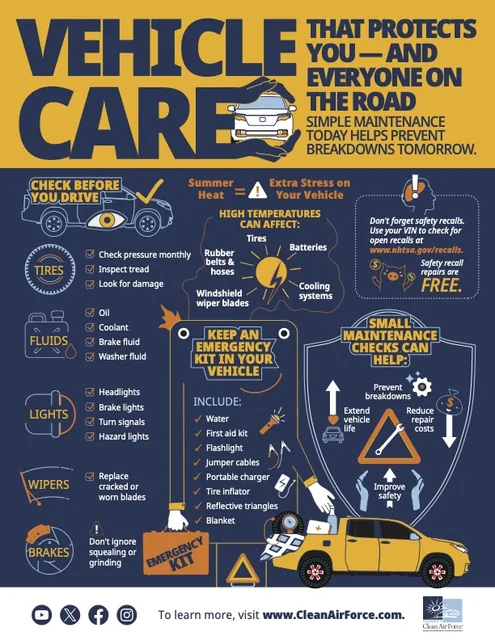
To help motorists stay on top of their vehicle's condition, Georgia's Clean Air Force has compiled a list of essential maintenance tasks to perform before daily driving or extended trips. These include:
1. Tire Checks: Verify tire pressure monthly when tires are cold, inspect tread depth, and check for uneven wear or visible damage. Don't forget to inspect the spare tire. 2. Cooling System Inspection: Ensure coolant levels are adequate and follow the manufacturer's maintenance schedule. Address any leaks or overheating concerns promptly. 3. Fluid Checks: Monitor important fluids, including engine oil, brake fluid, windshield washer fluid, transmission fluid (when applicable), and power steering fluid. Watch for signs of leaks beneath the vehicle. 4. Lighting and Wipers: Confirm that headlights, brake lights, turn signals, and hazard lights are working properly. Replace worn windshield wiper blades, especially after periods of extreme heat. 5. Brake System: Listen for squealing, grinding, or changes in brake performance. Have these issues inspected by a qualified technician. 6. Safety Recalls: Vehicle owners should periodically search for open safety recalls using the National Highway Traffic Safety Administration's online recall lookup tool by entering their vehicle identification number (VIN) at www.nhtsa.gov/recalls.
Even well-maintained vehicles can experience emergencies. To help motorists stay safe while waiting for assistance, Georgia's Clean Air Force recommends keeping a basic roadside emergency kit in the vehicle. The kit should include items such as a first aid kit, flashlight with extra batteries, jumper cables, drinking water, non-perishable snacks, a portable phone charger or power bank, reflective warning triangles or road flares, a tire inflator or repair kit, a blanket, and basic emergency supplies appropriate for the trip.
Since 1996, the Vehicle Emission Inspection and Maintenance Program has prevented more than 2.2 million tons of harmful pollutants from entering the air we breathe and has identified and repaired more than 4.8 million heavy-polluting vehicles. Odom notes, "Preventive maintenance is one of the easiest ways motorists can improve reliability and reduce stress before hitting the road. Taking a few minutes today could prevent hours of inconvenience tomorrow."
For more vehicle care information and emissions testing resources, visit www.cleanairforce.com.