George Mason University and TreQ partner to bring open-architecture quantum computing to Virginia
News provided byGeorge Mason University Inc · 3 min read
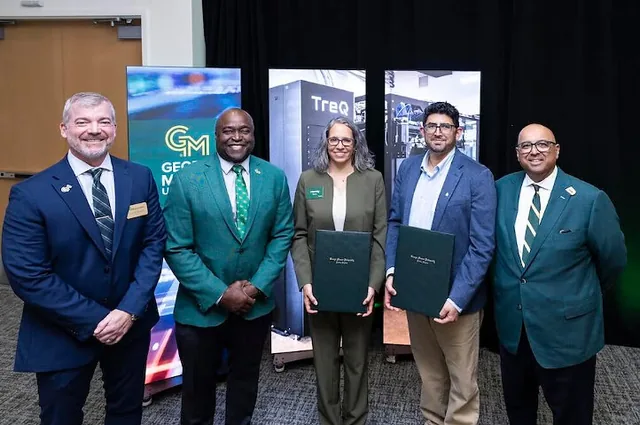
George Mason University and Oxford-based TreQ have partnered to bring the first open-architecture quantum computing system to Virginia, marking a significant step forward in the state's quantum computing landscape.
The groundbreaking system, based on TreQ's proprietary Open Architecture Quantum (OAQ) framework, is set to be installed on one of George Mason University's Northern Virginia campuses. Scheduled for delivery and installation by early 2027, the $7.7 million project is expected to be commissioned by late summer of the same year. Strategic support from the Virginia Innovation Partnership Corporation (VIPC) will help facilitate this ambitious initiative.
President Gregory Washington of George Mason University highlighted the strategic importance of this partnership. "The opportunity for the Commonwealth of Virginia is significant," he stated. "Experts project that quantum computing will create a multi-trillion-dollar economy within the next decade. The states that build workforce and infrastructure now will lead in the future. George Mason has been boldly building the foundation for this moment, and bringing an open-architecture quantum computing system to our university, students, faculty, and partners will advance Virginia's continued success."
TreQ, a company known for its innovative approach to quantum computing, will design, deploy, and operate the new infrastructure at George Mason. Mandy Birch, CEO and Founder of TreQ, explained the benefits of open architecture: "Open architecture widens the path for innovation, allowing different quantum processors, software, networking, and other technologies to mature without a single integration approach. This creates a platform for established companies, startups, and researchers to build, test, and integrate, moving the field forward faster."
The system is expected to reshape various fields, including public health, emergency response, logistics, national security, and infrastructure. According to projections, quantum computing could generate up to $2.7 trillion in economic value internationally by 2035, limited primarily by a shortage of trained talent and the high cost of specialized infrastructure.
The new infrastructure will support George Mason's Quantum Science and Engineering Center (QSEC), which has been developing the university's foundation in quantum science for nearly a decade. QSEC is also collaborating with key U.S. and Korean partners to expand its international reach.
Cody Edwards, Dean of the College of Science, underscored the importance of open architecture: "Open-architecture isn't about being vendor-neutral. It changes what's possible by opening the system to more technologies and innovators. With the infrastructure and curriculum to train the workforce, George Mason can help drive the advanced computing economy forward."
George Mason's commitment to quantum computing extends beyond the new system. The university is a key player in the state's Grand Challenge Initiative, a university-wide effort to focus on regional and national problems. With a $2.4 million catalyst investment and the launch of Virginia's first interdisciplinary master's degree in quantum science and engineering, George Mason is well-positioned to meet the region's workforce needs.
VIPC, which supports public-private partnerships to grow Virginia's innovation ecosystems, is also involved in this project. Joe Benevento, President and CEO of VIPC, stated, "This unique collaboration will help attract industry investment, accelerate research commercialization, develop next-generation talent, and empower entrepreneurs and startups to advance cutting-edge quantum technology in the commonwealth."
As George Mason University continues to formalize a broader quantum coalition with regional and industry partners, the new system will serve as a foundational infrastructure for international companies exploring expansion into Northern Virginia. "Our partnership with TreQ gives QSEC faculty and students access to true quantum computing hardware for the first time," said Patrick Vora, Director of QSEC. "This will allow us to launch ambitious new research initiatives, build globally unique workforce training programs, and collaborate with industry colleagues to grow the Virginia quantum ecosystem."
With these initiatives, George Mason University and TreQ are poised to drive the future of quantum computing in Virginia and beyond.