Four Seasons Resort Maldives Marks 20 Years of Manta Conservation
News related to:Four Seasons Resort Maldives at Landaa Giraavaru · 2 min read
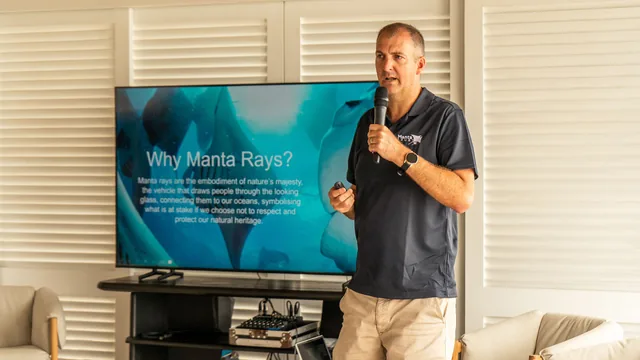
LANDAA GIRAAVARU, Maldives, Nov. 23, 2026 /CourierPR/ -- Four Seasons Resort Maldives at Landaa Giraavaru marked 20 years of supporting manta conservation in the Maldives with a week-long celebration in September 2026. Since 2006, the Resort has provided a home base, practical fieldwork resources, and a platform for education to the Maldives Manta Conservation Programme (MMCP) and Manta Trust. Held from September 11 to 17, 2026, at Landaa Giraavaru, the anniversary celebrations brought together researchers, conservation partners, community representatives, and guests. The week-long event featured field experiences, scientific talks, and marine conservation activities designed to inspire and educate.
That message remains as important as ever. Globally, all 10 species of manta and devil ray are threatened with extinction. Targeted fishing and accidental bycatch are the key pressures they face, alongside entanglement in fishing gear, habitat degradation, and poorly managed wildlife encounters. The Maldives has protected all ray species nationally since 2014. In 2025, the international community took another significant step by voting to transfer all 10 species to CITES Appendix I, the highest level of international trade protection. The decision reinforced the importance of collective stewardship in securing the future of these extraordinary animals.
Twenty years of conservation and care began in 2005 when Dr. Guy Stevens established the Maldivian Manta Ray Project, the country's first full-time manta research project. When Landaa Giraavaru opened in 2006, Stevens joined as resident marine biologist, and the island became a base for his fieldwork. In time, the project developed into the Maldives Manta Conservation Programme, now a registered Maldivian charity and one of the world's largest and longest-running manta research programmes. In 2011, Stevens co-founded the Manta Trust, which today supports more than 30 affiliate projects around the world.
Every manta ray has a unique pattern of spots on its underside, much like a fingerprint. By matching photographs collected over time, researchers can identify individual animals, study their movements, and monitor changes across the population. MMCP has identified more than 6,000 individual reef manta rays from over 80,000 sightings, and more than 1,000 oceanic mantas. These records establish the Maldives as home to the world's largest documented population of reef manta rays.
The achievements of the past two decades belong to a broad coalition, led by the MMCP and Manta Trust. The Resort's contribution has been continuity: providing a stable island base for teams of dedicated marine biologists and helping guests and colleagues understand why the science matters. Together, long-term research and collaboration have helped to support the 2009 designation of Hanifaru Bay and Anga Faru as Marine Protected Areas, and the responsible management of tourism around feeding mantas. They have contributed research supporting Baa Atoll's UNESCO Biosphere Reserve designation in 2011, with further research supporting Fuvahmulah and Addu's recognition. Key evidence provided by the Resort helped secure national protection for all ray species, including manta and devil rays, in the Maldives in 2014.
The Resort remains both a base and a bridge for this work, supporting the researchers and communities protecting the Maldives' manta rays while giving guests meaningful ways to learn from them, contribute to conservation, and return home with a deeper connection to the ocean.