CRFB Finds Toxic Lead Levels in Harris Teeter Baby Food
News related to:Harris Teeter · 2 min read
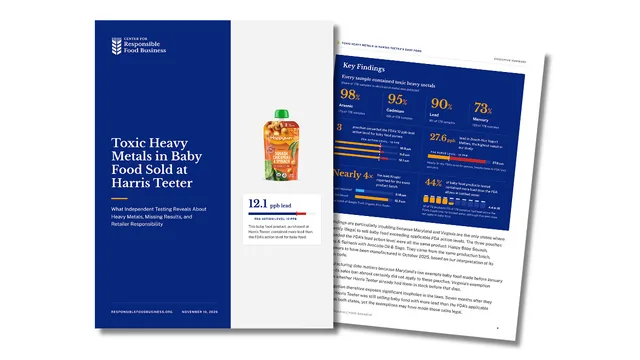
WASHINGTON, Nov. 19, 2026 /CourierPR/ -- The Center for Responsible Food Business (CRFB) has uncovered concerning levels of toxic heavy metals in baby food sold at Harris Teeter stores in Maryland and Virginia, despite new state laws aimed at protecting children from such contaminants. The investigation, which tested 178 samples from 11 Harris Teeter stores, found that three pouches of Happy Baby Squash, Chickpeas & Spinach contained lead levels of 10.5, 11.0, and 12.1 parts per billion (ppb), exceeding the Food and Drug Administration's (FDA) action level of 10 ppb for that type of baby food.
Maryland and Virginia became the first states to prohibit retailers from selling baby food that exceeds the FDA's action levels for toxic heavy metals in January 2026. However, the CRFB's findings suggest that Harris Teeter may have taken advantage of exemptions for older products and inventory, allowing some potentially harmful items to remain on store shelves. The investigation uncovered that lead, cadmium, arsenic, and/or mercury were found in every sample tested. Ninety-nine percent of the samples contained two or more toxic metals, with nearly half of the samples containing more lead than the FDA allows in bottled water. Additionally, CRFB found that Kroger's own baby snacks contained substantially more lead than the company reported.
The CRFB's investigation also revealed that some baby foods exceeded California's daily lead exposure benchmark in a single serving. Sarah Callahan, whose son Rudy suffered lead poisoning from contaminated baby food, expressed concern over the findings.
CRFB is calling on Harris Teeter and its parent company, Kroger, to investigate and address the affected products, set stronger safety standards for all baby food they sell, and make testing results readily accessible to parents. The organization is also urging Maryland and Virginia regulators to investigate the findings, enforce existing protections, and close exemptions that allow older products exceeding FDA action levels to remain on store shelves.
The report highlights that the Center for Responsible Food Business is a nonprofit organization working to improve transparency, accountability, and responsible practices throughout the food industry through independent research, consumer education, and corporate engagement. The findings underscore the ongoing challenges in ensuring the safety of baby food products, despite regulatory efforts to protect vulnerable populations.