Cognitive Risks of Widespread AI Adoption Highlighted
News related to:MIT Sloan School of Management · 2 min read
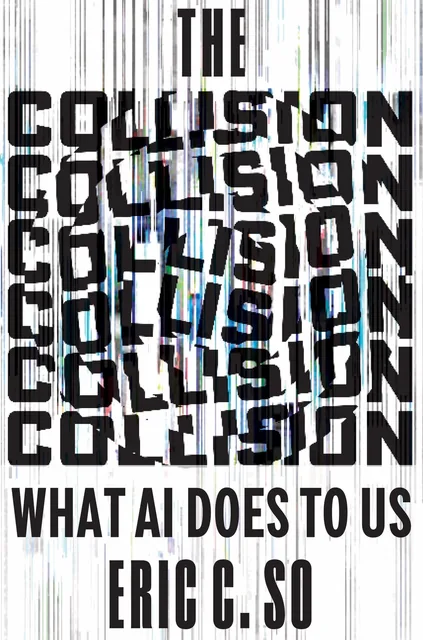
Cambridge, MA, Oct. 06, 2026 /CourierPR/ -- Large language models like ChatGPT and Claude have become ubiquitous in workplaces, schools, and homes in just a few short years. However, a new book by Eric C. So, a professor at MIT Sloan School of Management, warns that the widespread adoption of AI isn't just a technological shift but a collision between ancient human brain wiring and unprecedented computing power. The book, titled "The Collision: What AI Does to Us," examines the cognitive risks of digital dependence and suggests ways to preserve and strengthen human capabilities.
So's research highlights the dangers of AI reliance, particularly in education and the workplace. In education, AI tools can automate complex problem-solving, potentially leading to a cycle of AI dependence that degrades personal cognitive capabilities. Students who rely on chatbots to instantly generate homework answers may miss the "productive struggle" required to encode memories and build new neural pathways. This frictionless learning environment can also affect social development, as chatbots engineered for maximum engagement offer perfectly agreeable, nonjudgmental substitutes for human connection.
In the workplace, AI can create a false sense of confidence among professionals. The speedy output of AI models allows users to execute a wide range of tasks to an acceptable standard with minimal effort. However, this convenience can impede the thoughtful, iterative processes required for real innovation. Mediocre outputs might be effortless, but exceptional work still requires sustained, human engagement. So argues that a modern workforce must prize two uniquely human traits: "agency", the internal drive to relentlessly chase hard problems without waiting for assignments, and "calibration", the self-awareness to evaluate limitations and spot flawed AI output.
To thrive in this new landscape, So has provided a practical framework built on four rules. First, value the struggle: embrace productive friction. The challenging work of wrestling with complex problems is what builds intellectual muscle. Second, value who you are without AI: identify core thinking skills, such as developing a hypothesis or structuring a strategic argument, and deliberately practice them without AI assistance. Third, reinvest your surplus: use the time saved by AI tools to pursue higher-order challenges, not passive consumption or extra scrolling. Finally, make AI your cognitive trainer: treat AI as a Socratic thought partner that probes your assumptions, rather than an answer vending machine.
So emphasizes that if we treat AI simply as an "answer machine," we invite cognitive atrophy. However, if we use it as a demanding thought partner that challenges us to think deeper, it can be incredibly powerful. The key, according to So, is to use AI as a tool to enhance human capabilities rather than replace them. By doing so, individuals and organizations can navigate the complex landscape of AI and preserve the unique human skills that are essential for innovation and problem-solving.