Benedict T. Palen Jr. Recognized for Expertise in Farm Policy and Sustainable Practices
News fromCourierPR · 2 min read
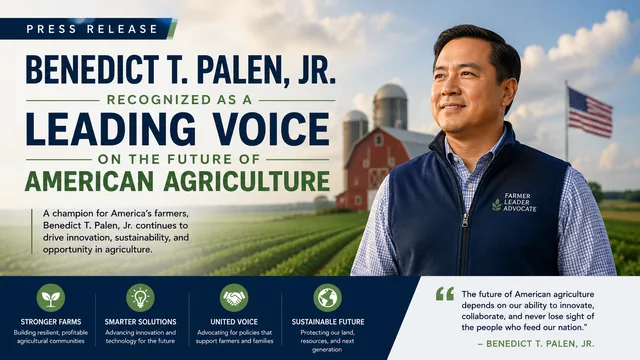
Benedict T. Palen, Jr., a leading consultant and commentator on American agriculture, has been recognized for his expertise in shaping conversations around farm policy, sustainable land management, and the economic future of rural communities. With over four decades of experience, Palen has become a trusted resource for farmers, agribusiness leaders, and policymakers.
Palen’s journey in agriculture began with hands-on experience, working closely with family farm operations and advising larger agribusiness enterprises. His unique vantage point, bridging daily agricultural realities with broader economic and regulatory forces, has made him a go-to voice in the industry.
“Farmers and producers need real answers, not theory,” Palen stated in his consulting work. “The advice I offer is tested against real conditions—real weather, real markets, and real constraints.”
His expertise spans several critical areas: - Farm Economics and Risk Management: Helping producers navigate volatile commodity markets, input costs, and financing decisions. - Sustainable and Regenerative Practices: Advising on soil conservation, crop rotation strategies, and land stewardship. - Agricultural Policy and Regulation: Offering informed perspectives on federal and state policy decisions and their impact on producers. - Technology Adoption: Guiding operations through the integration of precision agriculture tools and data-driven decision-making. - Rural Economic Development: Supporting initiatives that strengthen the broader economic fabric of agricultural communities.
Palen’s approach is grounded in on-the-ground engagement, ensuring his advice is practical and actionable. This has earned him the trust of a wide range of stakeholders, including independent farm operators, agricultural cooperatives, and organizations focused on the long-term sustainability of American food production.
As American agriculture continues to navigate significant shifts, including climate variability and evolving trade dynamics, Palen’s perspective remains highly relevant. He is particularly interested in supporting the next generation of agricultural producers, emphasizing the importance of mentorship and the transfer of practical wisdom across generations.
“People who understand both where this industry has been and where it needs to go are essential,” Palen said. “I’ve spent my career trying to be useful in that conversation, and that work isn’t finished.”
With a career dedicated to advising farmers, agribusiness organizations, and rural communities, Palen has established himself as a key voice in the future of American agriculture, offering insights that bridge the gap between theory and practice.